

THIS POST MAY CONTAIN AFFILIATE LINKS. PLEASE SEE MY DISCLOSURES. FOR MORE INFORMATION.
Retiring early is the goal for many.
After all, who wants to work for the rest of their lives until they’re well into their golden years?
It’s definitely a personal dream for me.
That said, what people don’t take into account is the fact that retiring early can be a problem if you don’t have the retirement income, retirement savings, or retirement skills that you need to sustain yourself through the remainder of your life.
Nothing is worse than reaching a goal, only to find that you’re running out of money shortly after you’ve crossed the finish line.
If you have your eyes on an early retirement, let’s take a look at some of the top tips on how to retire at 50 that will bolster your early retirement planning and equip you with everything you need to be successful.
11 Tips to Achieve Early Retirement at 50
#1. Plan, Plan, Plan

The planning stage is the single most important element of your early retirement strategy.
If you don’t have a plan, the chances of you having to come out of retirement to make up for the lack of planning is practically guaranteed.
Of course, a retirement plan encompasses so many different areas.
When you’re working on figuring out what you need to retire by 50, focus on the following for a comprehensive retirement plan.
Required Annual Income
The biggest challenge more people face when planing to retire early is retirement income.
The reason income is a problem is because since you are retired, you are not generating an income.
So where will your money come from?
Social Security isn’t an option, since you can’t start collecting until age 62.
And most of your retirement accounts won’t let you take penalty free withdrawals since you are younger than 59 1/2.
You need to have other income streams to support you.
For example, if you invest in real estate, you could have rental income.
Or if you invested in dividend paying stocks in a taxable brokerage account, you could use this income to live.
Alternatively, you could look at your contributions to your Roth IRA.
Since your contributions are make after-tax, you can withdraw these without tax implications.
However, since this money grows tax free, you might want to let it grow as long as possible.
Another option is to consider using a 72t plan.
This works with a traditional IRA and allows you to withdraw money without paying the early withdraw penalty.
You would still have to pay taxes on it however.
There are some catches however.
According to Michael Hunsberger, ChFC®, CFP®, CCFC, at Next Mission Financial Planning, “There are two common things that can surprise people regarding 72T Distributions. One is not understanding that you must either continue it until you reach 59 ½ or for a minimum of 5 years, whichever is longer. I find that people sometimes start them at 56 or 57 and then think they are good at 59 ½ to change things, but that will result in the 10% penalty being applied to all withdrawals before age 59 1/2. The second issue is making changes to the payments or even depositing to that account. That will also result in the 10% penalty being applied.”
Because there are many specifics about the 72t plan option, it is recommended you speak with a qualified financial advisor or tax pro to ensure you don’t get hit with significant penalties and taxes.
Because of these complications, if you plan to retire at 50, you need to have a detailed plan for your income.
Required Investments and Savings

Your investment strategy has a massive impact on your quality of life and your ability to retire.
Which retirement accounts will you need? Which traditional or alternative investments will serve to grow your wealth substantially?
How much do you need saved on the side that’s easily accessible and won’t trigger capital gains taxes?
From health savings accounts to stocks to retirement account options, make sure you’re working on an investment strategy that will support you.
Of course, you need to have an idea of how much money you even need to retire.
Most experts recommend the rule of 25.
Here, you take your annual expenses and multiply them by 25. The result is how much money you should have saved for a comfortable retirement.
For example, if your annual expenses are $65,000 multiply this by 25 to get $1,625,000.
If you know your monthly expenses, multiply this by 12, then take that number and times it by 25.
Here, $3,000 a month is $36,000 ($3,000 x 12), and your retirement savings should be $900,000 ($36,000 x 25).
Using an easy to use retirement calculator can go a long way in making this process easy and give you confidence moving forward.
Where You Plan to Retire
Where do you plan to retire? Much like it will be throughout your life, where you live will impact how far your money goes.
You want to make sure that you’re choosing a place you will enjoy being in yet one that is still conducive to a modest retirement lifestyle.
Keep in mind that you’ll also likely need a home to avoid renting, and you’ll want to make up your mind early.
To save money, many early retirees choose to retire abroad.
The cost of living overseas can be significantly cheaper, allowing your money to go much farther.
How You’re Going to Deal With Things You Don’t Qualify for Yet

We already discussed how you won’t qualify for all the retirement benefits when retiring early.
But many people overlook health costs.
Without a job, you likely won’t have health insurance offered by an employer.
Since you are young, you can’t apply for Medicare either.
Because of this, it’s crucial that you are able to survive on what you have until you can get the additional support, regardless of whether you need to pay for healthcare expenses or other basic needs.
Many people opt for government health insurance to cover them.
Others planned ahead and invested in a health savings account, allowing them to pay for qualified medical expenses tax free.
Both are good options to cover you for the time being.
#2. Eliminate Debt
Debt can be a major threat to your retirement plans.
The more debt you have, the more income you will require to survive.
As a result, debt can end up delaying the idea of early retirement for many.
Think of it this way: Let’s say you have $750 in monthly debt payments you have to make.
This comes to $9,000 a year of your income that goes to debt. Over ten years, that is $90,000!
And using the 25x formula above, that means you need to save an additional $225,000.
If you didn’t have that debt, you could retire on less money.
Or, you could still save the “extra” $225,000 and use it for an epic retirement.
#3. Save Aggressively

If you plan to retire at 50, you not only need to figure out your retirement income until you can start collecting Social Security or withdraw from your retirement accounts, but you need to make sure you have plenty in savings.
As mentioned above, a good rule of thumb is to have 25 times your annual expenses saved to enjoy retirement.
So how do you do this?
First, you need to pay off debt as discussed above. Next, you need a fully funded emergency fund to cover unexpected expenses.
From there, you want a mix of brokerage accounts to pull money from.
Ideally, you will have something along these lines:
- Taxable Brokerage Account: Having this account will allow you to take money out without penalty, regardless of your age.
- Roth IRA: A Roth account let’s you invest in after-tax money and withdraw 100% tax free.
- Traditional IRA: Your money in a Traditional IRA, grows tax deferred, meaning you owe taxes when withdrawing it. The government also requires you to withdraw money as you age.
- Health Savings Account: This account allows you to save money and spend it tax free on eligible medical expenses. This can go a long way until you reach the age of Medicare eligibility.
Of course, you need to know how each of these accounts work and compare that to each of them.
This way, you can ensure you are saving and eventually withdrawing money in a way that makes the most sense for you, your financial future, and your taxes.
Here is a breakdown of the highlights of each.
| Account Type | Pros | Cons |
|---|---|---|
| Taxable Brokerage Account | No contribution limits. No withdrawal restrictions. | Capital gains on growth. No tax benefits on contributions. |
| Roth IRA | Tax-free growth and withdrawals in retirement. No required minimum distribution (RMD) | Limits on annual contributions. Early withdrawals of earnings may be penalized. |
| Traditional IRA | Tax-deferred growth. Possible tax deduction. | Taxed as ordinary income upon withdrawal. Has required minimum distributions. |
| Health Savings Account | Tax-free contributions, growth, and withdrawals on eligible medical expenses. | Annual contribution limits. |
#4. Focus on Developing a Diversified Portfolio
Having a mix of tax advantaged retirement accounts and non-retirement accounts is smart, it’s also important to diversify your portfolio.
Why?
The phrase, never put all of your eggs in one basket, should come to mind.
The more you invest in different assets, the less likely you will be to lose all your money in a downturn.
There are all sorts of asset allocations you can choose from, but the 60/40 model is very popular.
Here, you put 60% of your investments in equities (stocks) and 40% in fixed income (bonds).
This strategy allows for growth and protection of your savings.
For me, I invest in an 80/20 portfolio. I put 80% of my money into stocks and 20% into bonds.
I do this primarily because I am younger, I want my money to grow into larger sums, and I am OK with more risk.
As I approach my early retirement goal, I will shift to a more conservative approach to protect my nest egg.
Historically, it was recommended that you took 100 minus your age to know how much money you should invest in stocks.
For example, a 70 year old should only have 30% in stocks.
While this advice was good at the time, it no longer works.
People have a longer expected lifespan now, with many people living well into their 90s.
Taking too conservative of an approach could be risky.
#5. Calculate Social Security Benefits Based on Current Projections
Almost everyone knows that you get a Social Security benefit when you retire.
However, most people don’t know exactly how that’s calculated.
I’ll admit, the explanation that the Social Security website offers isn’t the easiest to understand.
The good news? They do make it easier to figure it out by offering a quick calculator for Social Security on their website.
It’s important to figure out early on just how much you will get when you do finally reach retirement age.
Consider what your projections are and whether or not they will support you.
Ideally, you want to try to wait until you are 70 years old to start collecting.
Doing this offers you the largest monthly benefit possible.
If you find that the amount is not enough to meet some of your needs, you’ll know that you have to find more ways to make money over time.
#6. Develop Multiple Retirement Income Sources

Continuing with the above point, you’re going to have to make a considerable amount of money if you want to be able to retire early.
If you don’t have the income, you likely won’t have the savings, investments, and full Social Security benefits that you need to survive.
But what are some ideas that will help you get started?
If you’re looking to bolster your income, consider new income sources from:
- Taking on another part-time job or full-time job
- Starting your own business
- Becoming a freelancer
- Looking for side hustles like flipping or babysitting
- Selling your own crafts online
- Selling digital goods (ebooks, worksheets, etc.) online
There are plenty of great side hustle ideas out there that will help you bring in some extra cash so that you can chip away at your retirement plans more effectively.
Any of the money from these additional income sources should go directly into savings, and not be used to meet monthly obligations.
#7. Consider Ways You Can Make Money After You Retire Early
Retirement means that you’ve stopped working.
However, that doesn’t mean that you necessarily have to stop making money.
If you’re like me, you’re probably curious as to whether there’s a limit to how much you can make.
If you decide to get your Social Security benefits before full retirement age, you will have a set limit that will reduce your overall benefits if you go over that threshold.
However, if you’re bringing in extra money after you reach full retirement age, this isn’t going to be deducted from your benefits.
Some great ways to bring in more money are to rent out properties, engage in a hobby you love and sell those items, or even become a passionate vlogger or content creator and post your content for the world to see.
Don’t stress yourself out trying to make money as this is supposed to be retirement.
However, don’t think that you have to shy away from additional income streams simply because you are retired.
#8. Understand Income Taxes After Retirement
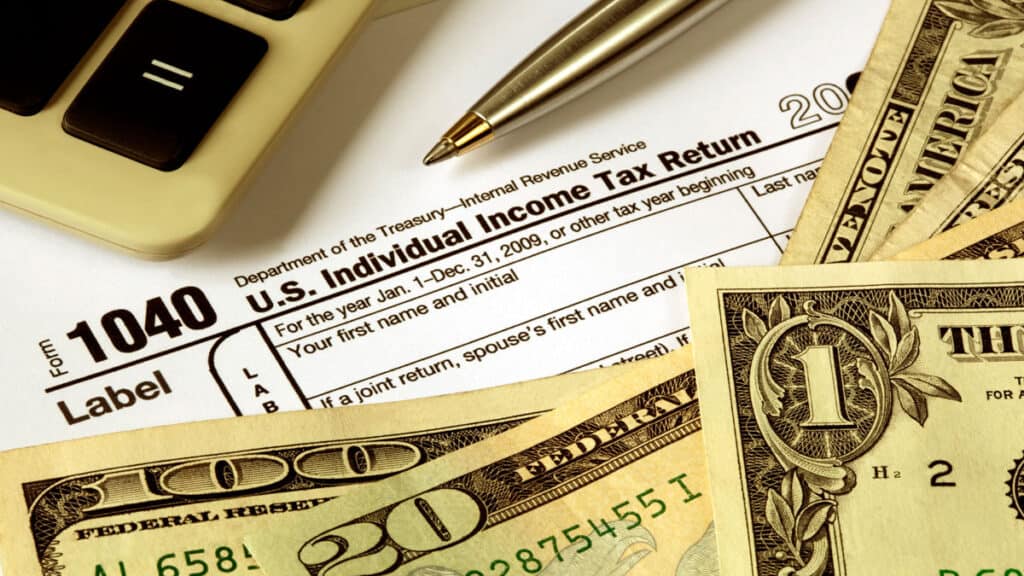
Your pre-retirement income is going to be different than your post-retirement income, and so will your taxes.
You likely will have less income, so you might not need to itemize your deductions.
Additionally, because you will be taking money out of traditional retirement accounts, you will have other forms to complete.
This isn’t saying you should give up on your dream of early retirement. Rather it is to plan ahead so you can limit any potential surprises.
#9. Avoid Financial Mistakes
Making financial mistakes in your youth is something I’m definitely guilty of.
It’s easy to see money and to let your desire to purchase certain things or achieve a specific lifestyle take over.
It’s important to nip these in the bud long before retirement.
Learning how to budget, how to avoid lifestyle creep, and how to determine between wants and needs will make an immense difference in how well retirement goes for you.
If you never adopt these skills, you’ll run out of your money saved far more quickly than you’d like.
Cultivate these skills as soon as possible so that you can fully enjoy your retirement and avoid putting yourself in the way of financial ruin.
#10. Add a Buffer

No matter how much money you think you need to retire comfortably, you should add a 10% buffer on top of this number.
Not only are people living longer then ever, but healthcare costs continue to rise, meaning you need more money if something were to happen.
Additionally, you never know what will happen in the future.
I’m sure not many people saw inflation raising prices on everything and eroding their purchasing power like it recently has.
Finally, maybe once you hit retirement, you find a new hobby that forces you to recalculate your retirement budget.
It would be nice to not have to cross things off your bucket list.
#11. Know Your Financial Situation is Unique
The advice given here is general advice.
Each person’s retirement will look different, based on your retirement goals, how much you have in savings, and the exact age you plan to retire.
As a result, it is critical you sit down and create a financial plan based on what you want retirement to look like.
Doing this only increased the odds of achieving your financial goals and retiring comfortably.
Final Thoughts
Reaching financial independence and retiring early is a great dream to have.
The good news is doing so is completely within your control.
You simply need to make it a priority and save and invest aggressively while you are young and keep your expenses low.
If you can do this, you should be in good shape for turning your dream into a reality.

Leveraged bets in the stock market and real estate are two more ways. Nobody ever cut their way to riches. Another is start a business of your own as early as possible and sell at 50 years of age. It’s pretty hard to carry a lunch pail to work every day, cut expenses, live below your means and save 10% of your income and you’ll be able to retire early. This is a myth, a strategy that simply doesn’t work for most middle-class working people. Focus on income and increasing that #1, take some risks – start a business, sell it etc. etc.
So true about no one cutting their way to millions. You have to have a nice balance of both in order to make it.
We are hardcore working on all three of those things right now! We save a huge amount every month and work hard to keep the expenses as low as possible. We most recently decided to ditch cable when we received notice that the bill was set to go up by a lot and the company said they could not do anything better for the price. We don’t yet have a certain date/age when we’d like to retire by, but we think it will likely be way before age 65! Great post.
We are always watching our expenses. One day, I think we will cut cable, but it just doesn’t work for us (mainly me) right now. I love watching sports too much.
I don’t plan on retiring at 50, but 58 sounds pretty good! However, in order to do so we’re going to have to really downsize and move to a much less expensive area. But, I’m always up for an adventure!
It’s definitely tough to retire early when you live in a high cost of living area. We live in one and are looking to move a little further away from the city to lower our costs in a few years.
You hit the nail on the head with this one. We will be retiring at a more traditional age (55 for me, 63 for my husband) — mostly because our college and careers came later in life. But the principals we’ve used are the same: save, budget, and look at income streams.
That’s great Jean! My wife and I have the goal to retire by 50. We have 15 years to go and are on track so far, but there are a lot of “what ifs” still out there. We are both looking forward to seeing how things turn out.
I think you hit the nail on the head: Live off of less and figure out how to make more. Though it sounds simple, it really does just come down to those two basic things to balance the equation and retire whenever you really want to.
The key is to put focus on both to some degree. You can’t just cut spending and make it and odds are if you only save as much as possible, if you don’t address your expenses, chances are you will run out of money.
Great points here Jon! I’ve always wanted to “retire” by 40 using investment income such as real estate and stock.. I know that this is ambitious for me but I’d say 15 years is plenty of time and with “passive” income of around $1,500 a week (after tax) I’d say this would be plenty to have a comfortable life and even continue to keep growing an asset base :)..
I completely agree with putting any money you get from raises into investments and continuing to live on the same amount that you did previously, especially in my case (as I’m quite happy with the amount I’m being paid) 🙂
15 years is a good amount of time. The key is to make sure you keep your expenses low and save, save, save!! If you can do that, there is no reason why you can’t retire by 40.
For sure 15 years is a decent amount, if I don’t hit that exact timeframe then so be it but I’ve got things that I definitely want to pursue i.e. I certainly won’t be “retiring” in the sit on the couch and do nothing way!
For me I’d much rather focus on keeping expenses the same and increasing income, then that way you invest your pay increases, tax return windfalls as you say in the article. I’d rather enjoy a quality of life and create extra ways to generate income, rather than sacrifice for the sake of achieving a goal cause it has to be sustainable for me, otherwise life wouldn’t be worth living anyway 🙂
You had me at “rob an armored car” and “counterfeit money” 🙂
These are all solid points. The only one that I question is paying off your mortgage before you retire. While I think that is usually a best practice, some people may have a really low interest rate where that money may be better served in investments while still benefiting from the tax write off from a mortgage. My mortgage is at 3.4% and since I think that I can make more investing that money than having it tied up in my house I’ve decided not to pay any extra to paying off my mortgage.
Do you have a cutoff of when you think it’s better to invest versus pay off a mortgage early? I think for me if it’s 5% interest or higher than I contribute at least a little more than the minimum mortgage payments to pay it off quicker, but below that I have to take a hard look at where the market is at. With tax write offs it makes that percentage look even a little lower.
My retirement goal is 40, but I’m prepared to work until 45 if I need. My guess is that I’ll fall somewhere in between the middle of both of those but it’s hard to say when you’re predicting 8 to 13 years in the future.
You make a good point and it really comes down to how disciplined you are. Most people plan to put the money towards investing but finding something “better” than invest it. That is why I recommend paying off your mortgage first. If you are disciplined and will invest, then yes, with a low interest rate on your mortgage, you are better off finding a balance of investing/paying down your mortgage.
But again, you could argue that your after-tax return on investments won’t be that much higher than the interest rate you are paying anyways. There is always a counterpoint with money. That is why I like it so much. Learn by reading blogs and books to see how people approach financial issues, then apply that (or some form of that) to your life. The key is to pick what works/makes the most sense for you and what you will stick with long term.
With my status, I plan to retire at 60 in order to get the ideal retirement benefits. It’s kinda too late. Most of you want to retire before 60 which makes me think how I can get that financial stability sooner. I have a fear of missing out so I think I will just work and work until 60 or even after so that I can get the retirement life of a king. How good is that?
I think it all depends on your goals and your definition of retirement. For me, I think I will always be working. The difference is that I won’t be at a 9-5 job working for someone else. I’ll have the money to turn a side business or hobby into something that can earn me some spending money.
There are different ways to retirement at 50 but the three principles you mentioned are probably universal. I speak from experience: my husband retired from his job at 50 and I’m looking to not have to be employed if I don’t want to by October, 2018 when I’ll be 55. It is not that hard,really; you need discipline, patience and ingenuity to up your income.
That’s a great goal Maria! My wife and I hope to retire by 50. We have a plan in place as so far, all is well. There are a lot of uncertainties in the future, but we are confident with the right planning and discipline, we can reach out goal.
Great thought about getting a raise. Instead of purchasing that new car, invest that raise into something that will make you money instead of drain you of it.
Only after the first 3 have been appropriately dealt with should the Financial Planner speak about actual “Products”, as in mutual/managed fund varieties, direct shares, home, reits those forms of things.