

THIS POST MAY CONTAIN AFFILIATE LINKS. PLEASE SEE MY DISCLOSURES. FOR MORE INFORMATION.
You just opened a new checking account, and the bank employee gave you a few blank checks she called starter checks.
Confused, you wonder what a starter check is, but don’t ask because you have other things to do.
Now here you are, searching online for the answer.
In this post, I’ll walk you through everything you need to know about starter checks.
What Are Starter Checks?
Starter checks (also called temporary checks or counter checks) are temporary paper checks that banks and credit unions provide when you first open a checking account.
They let you write checks immediately while you wait for your personalized checkbook to arrive in the mail.
Unlike regular checks, starter checks usually don’t include your pre-printed name and address.
What Are Starter Checks? (Also Called Temporary Checks)
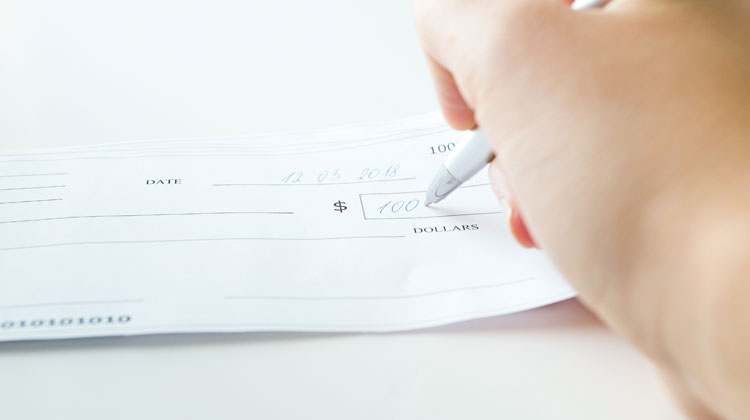
So, what is a starter check?
As the name suggests, starter checks are a type of check you start with when you open up a new checking account.
You might also hear them called counter checks or temporary checks.
Why is this?
While the typical checkbook is what you will inevitably receive after you open an account, the bank or credit union won’t be able to produce these types of checkbooks on demand.
Personal checks require special paper and include all the necessary bank information, your name and address, phone number, and account information.
As you’ve just opened your bank account, the bank doesn’t have the means to produce a traditional book of checks with all this information.
Instead, they start new account holders off with temporary checks, commonly called starter checks, until your permanent checks arrive.
Unlike regular checks, starter checks don’t have your personal information, like your name and address, printed in the upper right left-hand corner of the check.
And they aren’t made of the same check paper.
They resemble deposit slips you use to put money into your bank account.
Think of a starter check as a temporary version of a regular personal check.
It works the same way but lacks the personalized information printed on permanent checks.
However, they include the bank’s routing number and your checking account number needed to conduct transactions on the bottom of the check.
Starter checks traditionally have a low check number printed on them to indicate the types of checks they are.
Also, you might expect to receive around five starter checks when you open up a new checking account.
This amount should be enough to hold you over until your regular checkbook arrives in the mail.
Once you have them, you can use them like regular checks.
You’ll have to write your personal information in the top left corner in addition to writing out the check to make sure that they’re able to go through.
Starter Check Example
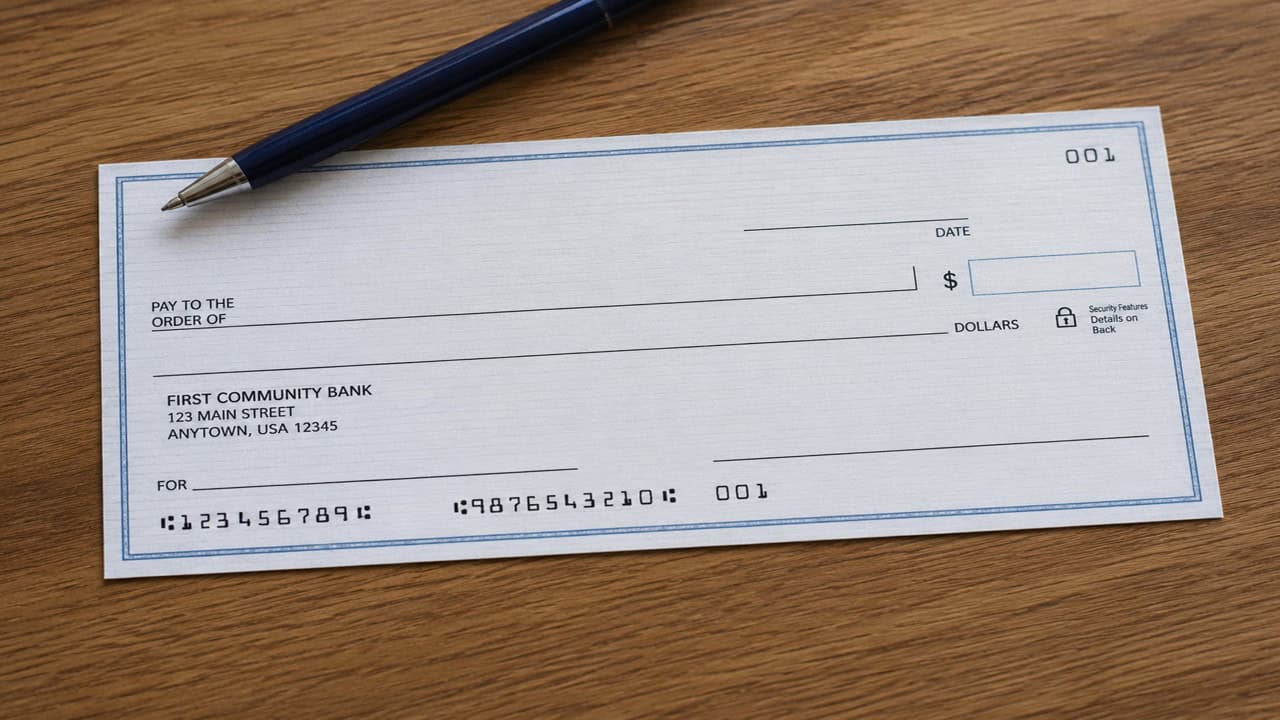
Below is an example of what a typical starter check looks like.
Notice that it doesn’t include the account holder’s pre-printed name and address like a regular personal check.
Instead, you’ll usually need to write your information in by hand before using it.
Starter Check vs. Regular Check
While starter checks and regular checks are used in much the same way, there are a few important differences.
The table below highlights the key distinctions.
| Feature | Starter Check | Regular Check |
|---|---|---|
| Personal Information Printed | No | Yes |
| Checkbook Included | No | Yes |
| Intended Use | Temporary | Long Term |
| Accepted Everywhere | Sometimes | Usually |
| Appearance | Generic | Personalized |
| Available Immediately | Yes | Usually Arrives By Mail |
As you can see, starter checks are simply a temporary version of a personal check.
They allow you to write checks immediately after opening an account, but because they don’t include your pre-printed personal information, some businesses may be reluctant to accept them.
Once your personalized checks arrive, they become the better option for everyday use.
What Places Accept Starter Checks?

While starter checks may sound like they come with their fair share of limitations, some businesses accept counter checks as they would a regular check.
There are some exceptions to this, however.
For example, if you find yourself in a bind at the grocery store and can’t use your debit card, your starter checks may come in handy.
With that in mind, that doesn’t mean that every place that accepts them will necessarily take your starter check.
Why?
With printed checks, retailers and other places know there is a good chance that the check is legitimate and the bank account it is linked to.
While there’s always the possibility of a check bouncing, there’s less likelihood of check fraud because they know your checks come from your bank and have some recourse.
Starter checks carry much more risk because they could potentially be fraudulent.
Also, because everyone knows you get starter checks when you open new accounts, merchants can be reluctant to accept a counter check.
The reason is that they don’t know if the checking account tied to the check has money in the account to cover the check.
When a checking account has insufficient funds, the check gets returned to the person who tried to cash or deposit and is usually charged a fee.
If your account includes overdraft protection, your bank may cover the payment, though you could still be responsible for an overdraft fee depending on your bank’s policy.
Also, because a temporary check doesn’t have your personal information printed on it, the merchant has a more challenging time confirming who the account holder is.
Personalized checks have your personal information printed on the check, so the merchant can confirm who the account holder truly is.
Finally, a start check is printed on regular paper, so it is much easier to try to pay with a fake one compared to a standard check that uses special paper.
As a result, not every business takes starter checks.
Making sure you have your debit card, credit card, or cash on hand is essential no matter your shopping trip.
For example, the answer to the question does Walmart accept starter checks, the answer is no they do not.
Retailers that accept them go through a lengthy verification process to limit the potential loss on their end.
This includes asking for proof of personal information, including seeing a photo ID.
They also usually write your driver’s license number on the check and even call the bank to ensure the account has funds available.
Some retailers might even ask you to write your Social Security Number on the back of the check.
The good news is that you can pay bills, including monthly utility bills, with starter checks without issue.
Cashing Starter Checks
Are you looking to cash a starter check?
The best way to find out whether you will be able to use your starter checks for cash is to do a bit of online research or to reach out to the place you need to go.
Ask if they accept starter checks before you head over.
Most places do not cash starter checks anymore, like many grocery stores, gas stations, and many banks, simply because of the risk.
- Read now: Learn how to write a check to yourself
What Should I Do With Starter Checks?
So, the best question to ask when you’re learning more about starter checks isn’t necessarily whether or not you can use them but what you should do with them in the meantime.
In this day and age, checks are almost obsolete.
The majority of the time, people pay with cash or credit card.
Even if you’re waiting for a new debit card to arrive in the mail, digital payment options like Apple Pay make it easy to pay before the physical versions come.
- Read now: Learn the pros and cons of debit cards
- Read now: Find out how to withdraw money without an ATM card
What about checks?
New checks might take a week or two to get to you, but you likely won’t need to write a check in that time.
If you do, you always have your starter checks to fall back on.
However, the best advice for those with starter checks may be to wait.
If you can go your first few weeks without using your starter checks, you don’t risk being turned away by some retailers.
Nothing is worse than going through the shopping process only to discover the tools you currently have aren’t accepted.
Then, once your new checkbook comes in, you have the permanent checks you need that you can make out to someone with confidence.
Another option is to ask the bank if they have access to an in-house printing solution.
Some banks can make temporary checks printed with your name and address on them, making them look like a regular check.
The downside is that there is usually a small fee for doing so.
But if you know you will be writing checks before your checkbook arrives, this could be worth the cost.
How To Write A Temporary Check
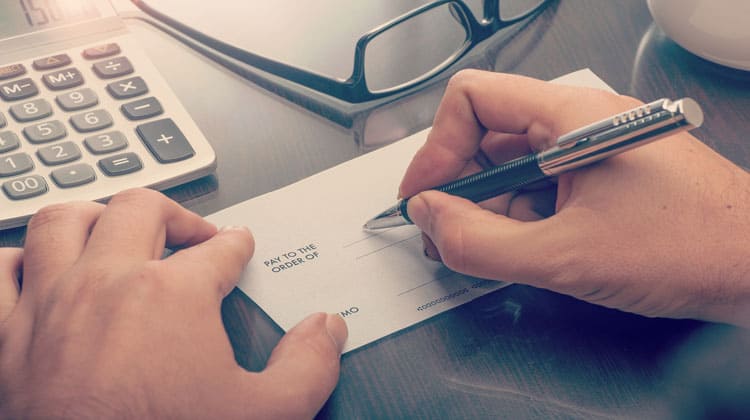
If you want to make a payment using a starter check, you must first fill out your personal information.
This includes your full name, address, and phone number.
From there, you fill out the ‘Pay To The Order Of’ section with the company’s name.
You then write out the numerical amount of the check and then spell out the amount as you would with regular checks.
If your starter check doesn’t have your account number listed, you will also fill this out.
In some instances, the business may also want you to write your driver’s license number and your Social Security Number on the check.
Frequently Asked Questions
What are starter checks?
Starter checks are temporary checks that banks provide when you first open a checking account.
They allow you to write checks immediately while waiting for your personalized checks to arrive.
What is a temporary check?
A temporary check is another name for a starter check or counter check.
Banks issue them to new account holders until permanent checks are printed and mailed
What is the difference between a starter check and a regular check?
Starter checks don’t have your pre-printed personal information and are meant for short-term use.
Regular checks include your name and address, come in a checkbook, and are generally accepted by more businesses.
Can I use a starter check anywhere?
Not always.
Many businesses accept starter checks, but some retailers refuse them because they present a higher fraud risk than personalized checks.
How many starter checks do banks give you?
Most banks provide around four to six starter checks, though the exact number varies by institution.
Can I order more starter checks?
Usually not.
Starter checks are intended only as a temporary solution while your personalized checks are being printed.
If you need additional checks, most banks will recommend ordering a permanent checkbook instead.
Final Thoughts
Starter checks are to tide you over if you need to write a check before your regular checks come in the mail.
They can be both great when you find yourself in a bind and not as helpful if you find yourself trying to write one to a company that may not accept it.
While you may hear the terms starter check, temporary check, and counter check used interchangeably, they all refer to the same thing.
They’re simply a short-term solution that allows you to write checks immediately after opening a checking account while you wait for your personalized checks to arrive in the mail.
While there are drawbacks to starter checks, especially since most retailers won’t accept them, you can still use them to pay monthly bills.
And you can also use the information on them, like your account number and the bank routing number, to set up online bill pay services or direct deposit if interested.
- Read now: Find out what happens if you bounce a check
- Read now: Click here for the first thing to do if you lose your checkbook
- Read now: What is a voided check
